Monday, July 3, 2006

Sunday, July 2, 2006
Wednesday, June 28, 2006
Friday, June 23, 2006
Thursday, June 22, 2006
Saturday, June 17, 2006
Friday, June 16, 2006
I was pleased to see Angola get their first World Cup point
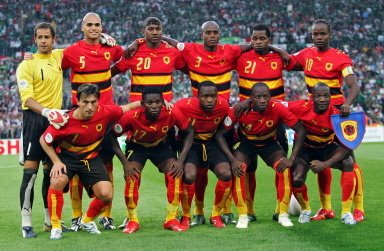 ANGOLA
Greater Goal: Healing a War-Torn Land
By Henning Mankell
The first time I visited Angola I was not aware that I was in that country. It was 1987 and I was living in the northwestern corner of Zambia, near the Angolan border. Narrow sand roads twisted through the endless bush. It was easy to get stuck while driving, and I often lost my bearings on my way to some distant village. When I'd stop to ask for directions, if the person I spoke to answered in Portuguese then it was imperative to get back to the right side of the invisible border quickly. Angola, so deeply wounded by its long colonial period, was throttled after liberation from Portugal by a violent civil war. The rebel leader Jonas Savimbi's warriors, infamous for indiscriminate violence, were everywhere. A generation of Angolans did not know what it was to live in a country where peace reigned.
But there was also something magical about that land beyond the invisible border: Soccer was everywhere. On gravel pitches and sandy beaches, on sidewalks and city squares, the ball was played back and forth between hordes of young men. The balls were made of the most remarkable materials, an old T-shirt or fishing net or woman's handbag filled up with paper and grass. But they rolled and bounced, and you could do headers with them and make goals with them. War could never kill soccer in Angola. The soccer fields were demilitarized zones, and the face-off between teams conducting an intense yet essentially friendly battle served as a defense against the horrors that raged all around. It is harder for people who play soccer together to go out and kill each other.
Angola has seen many of its soccer players leave the country to seek their livelihood, mostly in Portugal. But they have not given up their citizenship. And when they are called home to put on black shorts and red socks and jerseys, their national team colors, they do not hesitate. They are known fondly as Palancas Negras, the "black antelopes."
On the eighth of October 2005, Angola arrives at Amahoro Stadium in Kigali. At that moment the astonishing situation is that if Angola can beat Rwanda by even a single goal, it will qualify for the World Cup ahead of Nigeria—no matter what happens in Nigeria's game against Zimbabwe. It is a nightmarish wait for all the Angolans who sit with their ears glued to radios. Luanda stands still, Huambo, Lubango, Namibe, Lobito, Benguela, Malanje, every city, every village is gathered at radios. Perhaps even the antelopes themselves stand out on the savanna with pricked ears.
When the first half ends, the score is tied at zero. Meanwhile, Nigeria is on its way to victory over Zimbabwe. But in Kigali the game continues without a goal. It all seems to be ending badly for Angola. One wonders what the players and coaches said to each other at the half. Nervousness spreads among the players. Rwanda, playing only for its honor, comes close to scoring on several occasions. Everyone agrees that Angola is playing miserably. It is a team at the edge of a breakdown, missing passes and misunderstanding each other. There are ten minutes left. The Angolans are almost unconscious in their desperation. Then the last-minute replacement Zé Kalanga makes a cross pass that is as surprising as it is brilliant. Fabrice "Akwa" Maieco is in the right place. With a header he perfectly launches the game's only goal, past Rwanda's goalie, one bounce on the ground, and then the ball flies up into the net.
A person would have to live for a long time in Africa to understand what this victory means. Of course no one imagines today that Angola will get very far in the tournament. But it is in the very nature of soccer to be unpredictable. If it were not the case that underdogs can sometimes defeat the predicted winners, soccer would be uninteresting.
But a great victory has already been won. It brought no gleaming cup. This triumph exists first of all in the hearts and minds of the Angolan people. To go to the finals of the World Cup in soccer means an enormous amount to the self-confidence of a country that has been ravaged by war and deprivation. A country, battered for so long, will be built up again.
(Henning Mankell is the author of some 40 novels, including crime novels featuring inspector Kurt Wallander. He divides his time between Sweden and Mozambique, where he directs Teatro Avenida.)
Thursday, June 15, 2006
Wednesday, June 14, 2006
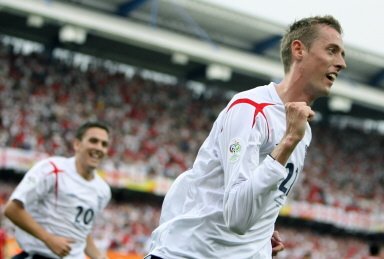
It's coming home?
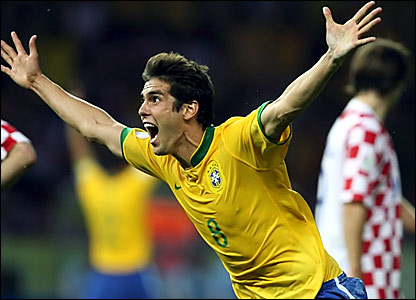
After the first round of group matches in the World Cup teams that have impressed include Brazil, Czech, Portugal, Italy, Holland, Germany and Argentina.
Monday, June 12, 2006
Winning Isn't Everything: Corruption in Sumo Wrestling
Professor Levitt, Director of the Becker Center on Chicago Price Theory at the University of Chicago, has been named as the Harry V. Roberts Statistical Advocate of the Year, 2006, by the Chicago Chapter of the American Statistical Association.
Created in 2001, the award recognizes the accomplishments and contributions of those who throughout their career have successfully advocated appropriate and effective uses of statistics in business and the public sector.
This is one of my favourite papers by Prof Levitt. Statistics with a sense of humour.
Created in 2001, the award recognizes the accomplishments and contributions of those who throughout their career have successfully advocated appropriate and effective uses of statistics in business and the public sector.
This is one of my favourite papers by Prof Levitt. Statistics with a sense of humour.
Friday, June 9, 2006
Love
Love is a temporary madness, it erupts like volcanoes and then subsides. And when it subsides you have to make a decision. You have to work out whether your roots have so entwined together that it is inconceivable that you should ever part. Because this is what love is. Love is not breathlessness, it is not excitement, it is not the promulgation of promises of eternal passion, it is not the desire to mate every seond minute of the day, it is not lying awake at night imagining that he is kissing every cranny of your body. No, don't blush, I am telling you some truths. That s just being 'in love,' which any fool can do. Love itself is what is left over when being in love has burned away, and this is both an art and a fortunate accident. Your mother and I had it, we had roots that grew towards each other underground, and when all the pretty blossom had fallen from our branches we found that we were one tree and not two' (Louis De Bernieres, Captain Corelli's Mandolin).
Wednesday, June 7, 2006
The Beautiful Game
 In an impoverished neighbourhood outside Lusaka, Zambia, boys fashioned a ball by weaving together strips cut from plastic boys. This month 32 nations will compete for the World Cup of soccer, the "beautiful game" that unites and divides countries around the globe. To celebrate that we bring you excerpts from The Thinking Fan's Guide to the World Cup.
Tuesday, June 6, 2006
Sunday, June 4, 2006
Saturday, June 3, 2006

Friday, June 2, 2006
Monday, May 29, 2006
Saturday, May 27, 2006
Thursday, May 25, 2006
Wednesday, May 24, 2006
Saturday, May 20, 2006
Friday, May 19, 2006
Thursday, May 18, 2006
Tuesday, May 16, 2006
West Wing
Dear UK, I don't know what series of the West Wing you are on, but if you can't wait to find out what happens, click here.
Sunday, May 14, 2006

Friday, May 12, 2006
Wandering Scribe
A woman living in a car, without a home has created a blog. She gets a 100 times more hits on her blog than me and has been interviewed by the Times and BBC. There's even talk of a book deal now!
Roooooooney!
'Improving Rooney could face Sweden'. I have been very depressed of late [footballing wise], but this article excited me no end.
Thursday, May 11, 2006


Sunday, May 7, 2006
Wednesday, May 3, 2006
Sunday, April 30, 2006

Saturday, April 29, 2006
More Worldview Economics Stuff
George Gilder, in his book Wealth and Poverty, produces a lengthy and compelling argument for what he calls supply side economics. He shows that there is nothing wrong with those who are well off shouldering more responsibility for the well-being of their society. This is often reflected in graduated tax rates. However, when the rate approaches 50%, the revenue received by the government actually begins to reduce. This is simply the result of those at this level beginning to work much harder at minimizing their tax. Add to this the dwindling incentive for earning more money, and one begins to see the pratical truth of Gilder's position.
The Laffer curve reveals this theory in a mathematical way. Reagan and Thatcher used this theory to promote tax cuts in the 80s. I'm not convinced, any thoughts?
Churchill once said, something like, people who are socialists in their 20s usually end up capitalists by their 40s. Well, I'm not quite 40 yet.
The Laffer curve reveals this theory in a mathematical way. Reagan and Thatcher used this theory to promote tax cuts in the 80s. I'm not convinced, any thoughts?
Churchill once said, something like, people who are socialists in their 20s usually end up capitalists by their 40s. Well, I'm not quite 40 yet.
Friday, April 28, 2006
Quotation of the day
The true foundation of theology is to ascertain the character of God. It is by the art of Statistics that law in the social sphere can be ascertained and codified, and certain aspects of the character of God thereby revealed. The study of statistics is thus a religious service.
F N David: Games, God and Gambling (1962)
- As I sit at my desk statistically modelling American insurance claims, I so wish the above quotation was true for me. I'm no Florence Nightingale.
F N David: Games, God and Gambling (1962)
- As I sit at my desk statistically modelling American insurance claims, I so wish the above quotation was true for me. I'm no Florence Nightingale.
Thursday, April 27, 2006
Monday, April 24, 2006
Saturday, April 22, 2006
Thursday, April 20, 2006
Thursday, April 13, 2006
Wednesday, April 12, 2006
Saturday, April 8, 2006
Friday, April 7, 2006
Sunday, April 2, 2006
Friday, March 31, 2006
Sunday, March 19, 2006
Interesting Statistics
Consider the global priorities in spending in 1998
Global Priority $U.S. Billions
Cosmetics in the United States 8
Ice cream in Europe 11
Perfumes in Europe and the United States 12
Pet foods in Europe and the United States 17
Business entertainment in Japan 35
Cigarettes in Europe 50
Alcoholic drinks in Europe 105
Narcotics drugs in the world 400
Military spending in the world 780
And compare that to what was estimated as additional costs to achieve universal access to basic social services in all developing countries:
Global Priority $U.S. Billions
Basic education for all 6
Water and sanitation for all 9
Reproductive health for all women 12
Basic health and nutrition 13
Any thoughts?
Global Priority $U.S. Billions
Cosmetics in the United States 8
Ice cream in Europe 11
Perfumes in Europe and the United States 12
Pet foods in Europe and the United States 17
Business entertainment in Japan 35
Cigarettes in Europe 50
Alcoholic drinks in Europe 105
Narcotics drugs in the world 400
Military spending in the world 780
And compare that to what was estimated as additional costs to achieve universal access to basic social services in all developing countries:
Global Priority $U.S. Billions
Basic education for all 6
Water and sanitation for all 9
Reproductive health for all women 12
Basic health and nutrition 13
Any thoughts?
Sunday, March 12, 2006
My Politics (and Religion)
It’s nearly state election time at the moment in Illinois. I was listening to a debate of local Republican candidates on the TV the other day. I was thinking how could any God fearing Christian ever vote for a right wing party, such as the Republicans or the Conservatives? In the Book of Acts, Luke reports believers sharing their possessions and talks about equality. Indeed it is these same passages that appear in Karl Marx’s teachings. Party’s that reduce taxation only increase the gap between rich and poor, whatever they say their motivations are. Taxation should proportionally increase with income in my view. The money should be spent wisely on education and healthcare. The welfare state systems of Europe creak at the seams but echo the sentiments of God far more closely than anything else I have seen. You may have guessed my politics are extremely left wing. Communist states have proven not to work in the past, but I put that down to the fallen nature of man, in the corruption, intolerance and state control rather than the pure idealism. Free market socialism for the common man works for me every time. This is a topic that interests me no end, and I would gratefully value any comments.
Saturday, March 11, 2006
Wednesday, March 8, 2006
Friday, March 3, 2006
Wednesday, March 1, 2006
Monday, February 27, 2006

Sunday, February 26, 2006
Wednesday, February 15, 2006
Saturday, February 11, 2006
Sunday, February 5, 2006
Friday, February 3, 2006
Wednesday, February 1, 2006




Subscribe to:
Posts (Atom)